Customer Lifecycle Marketing for Service Businesses
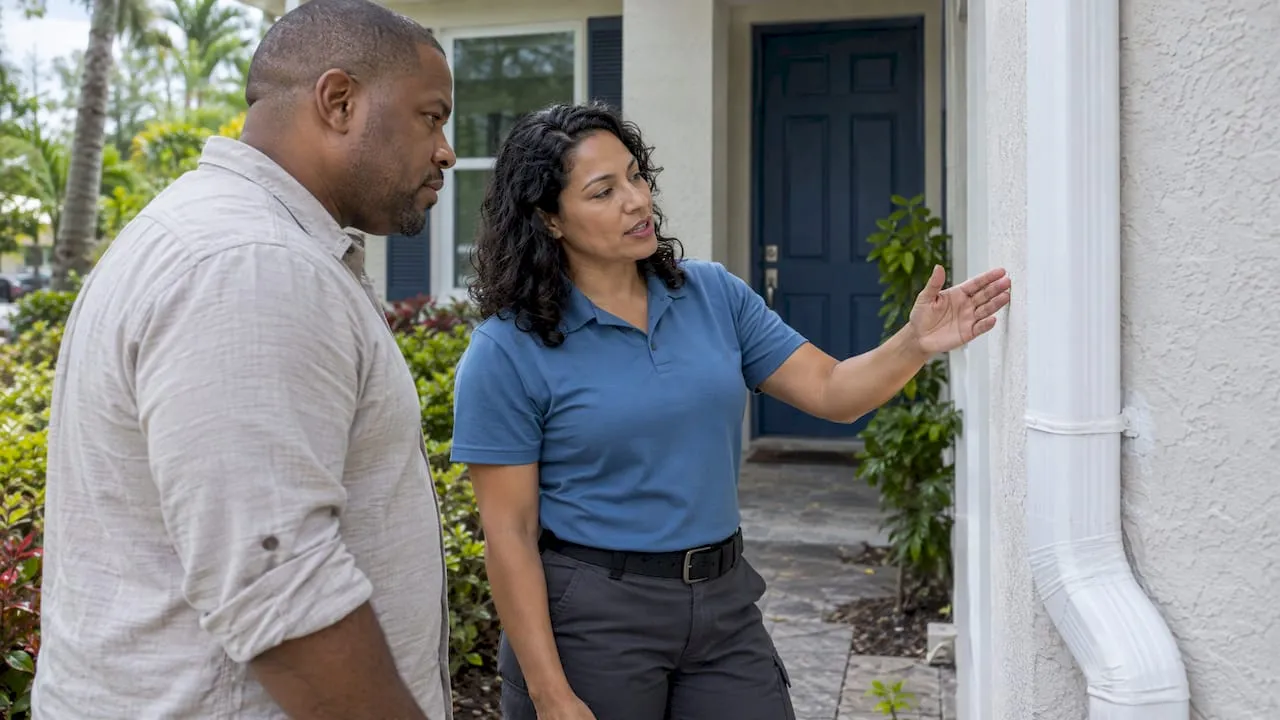
Customer lifecycle marketing means sending the right message to each person based on where they are with your business: a stranger, an inquiry, a quote, a paying client, or a past client. For a service business, it comes down to three things: a website that captures the inquiry, a follow-up that starts within minutes, and a system that keeps in touch after the job is done. We are a Delray Beach web design studio, and we build these pieces as one connected system instead of three separate tools.
This guide is for owners and practice managers. It skips the theory and shows what lifecycle marketing looks like in a plumbing company in Fort Lauderdale, a med spa in Boca Raton or a real estate agent in Miami.
TL;DR
- Lifecycle marketing follows what a person does, not the calendar. A form fill, a quote, a finished job or 90 days of silence each trigger a different message.
- Most service businesses need five stages: awareness, consideration, conversion, retention and advocacy.
- The biggest leak is usually between the inquiry and the first reply. Fix that before you build anything else.
- Your website, your customer list and your email or text follow-up must share the same information. If they do not, people get the wrong message.
- Track a small number of measures per stage, such as inquiries, booked calls, repeat jobs and reviews.
Table of Contents
- What customer lifecycle marketing means
- The five stages of the customer lifecycle
- Where service businesses lose people
- What to send at each stage
- A worked example: a Boca Raton med spa
- How to build your plan in six steps
- Your data has to live in one place
- What to measure
- Perspective
- Where Forefront Industries fits
- Common mistakes
- FAQ
- Sources
What customer lifecycle marketing means
A customer lifecycle is the path a person takes with your business. They find you, compare you to others, hire you, use your service and, if it goes well, come back or refer a friend. Lifecycle marketing plans a useful message for each of those points.
The difference from ordinary campaigns is timing. A conventional campaign is an isolated effort with a start and an end date, while lifecycle marketing is continuous and based on customer behavior (Monday.com, November 2025). A spring promotion is a campaign. A message that goes out the day after someone requests a quote, and another that goes out six months after a finished job, are lifecycle marketing.
Three examples of what that looks like:
- A homeowner fills out a form on your site at 9 p.m. They get a confirmation with next steps right away, and a call or text from you the next morning.
- A client signs a contract. They get a short welcome message that explains what happens in the first week.
- A past client has not booked in 12 months. They get a check-in with a simple way to reply or book.
None of these need a big marketing department. They need clear rules about who gets which message and when, and tools that follow those rules without someone remembering to press send.
The five stages of the customer lifecycle
There is no single official list. The most common model has five stages, and it fits most service businesses well. People do not always move in a straight line. Customers can revisit stages, skip steps or start a new cycle as their needs change (Amplitude), so treat the stages as a map, not a conveyor belt.
| Stage | What the person is doing | What they need from you |
|---|---|---|
| Awareness | Searching Google, asking a neighbor, seeing your name | To find you and understand in seconds what you do |
| Consideration | Comparing two or three providers | Proof: reviews, photos, prices or price ranges, clear answers |
| Conversion | Ready to hire | A simple way to call, book or request a quote, and a fast reply |
| Retention | A current or recent client | Clear communication, a good experience, a reason to return |
| Advocacy | A happy past client | An easy way to leave a review or refer someone |
Your own list may be shorter or longer. Start with the five above and rename them to match how your clients talk. A real estate agent might use “browsing listings,” “requested a showing,” “under contract,” “closed” and “past client.”
Where service businesses lose people
Most of the loss happens in two places: the website and the first reply.
The website at the awareness and consideration stages
Someone searching “med spa near me” or “roofer in West Palm Beach” lands on your site and decides in a few seconds whether to stay. A page that loads slowly, hides the phone number or looks like every other template gives them no reason to stay. If you suspect this is your problem, this look at why a website is not getting leads walks through common causes, from weak local search signals to unclear pages.
This is why we build custom-coded sites instead of templates or page builders. The page is designed around one outcome, which is getting the right visitor to contact you.
The first reply at the conversion stage
An inquiry that sits for a day is often gone. The person has already contacted another provider. Lifecycle marketing fixes this with an automatic response and a clear owner for each lead.
A good first response does four things:
- Confirms the request was received.
- Says when a real person will reply.
- Tells them what happens next.
- Gives one easy action, such as a booking link.
If you send quotes, the follow-up after the quote matters as much as the quote. This guide to quote follow-up templates and cadence shows how many touches to send and how far apart. For service providers, the usual pattern is to follow up after the first call or proposal with next steps, a relevant example of your work and a booking link.
What to send at each stage
Use the channel your clients already answer. Email works for most, and text works well for home services and appointments. Keep each message short and tied to one action.
Awareness
Your site, your Google Business Profile and your local search presence do the work here. Make sure your business name, address, phone number and service areas match everywhere they appear. Name the cities you serve, such as Delray Beach, Boynton Beach or Pompano Beach, on pages written for those areas.
Consideration
This is where a person has visited but not contacted you. Useful content here includes a pricing guide, a before-and-after gallery, a short list of common questions and recent reviews. If they gave you an email address in exchange for a guide or checklist, send a short sequence of two or three emails that answer the questions people usually ask next.
Conversion
Speed matters most. Send an instant confirmation, route the lead to the right person and set a reminder if nobody has replied in a set time. If a quote goes unanswered, follow up at set intervals with something new each time, not the same “just checking in.”
Retention
After a job, send a message that confirms it went well and explains any next step. Add reminders that fit your service: an annual service visit, a yearly treatment plan or a lease renewal. For clients who have gone quiet, a re-engagement sequence works. We wrote three ready reengagement sequences you can adapt.
Advocacy
Ask for a review when the client is happiest, usually right after the work is finished. Give them a direct link to your review page so it takes one tap. A referral request a few weeks later, with a simple thank-you, finishes the cycle.
A worked example: a Boca Raton med spa
This example is illustrative, not a client case.
A med spa gets inquiries from Google and Instagram. Without a lifecycle plan, the front desk answers when it can, sends one email with a price list and never contacts the person again.
With a lifecycle plan, it looks like this:
- Inquiry received: the person gets an automatic reply within a minute with a booking link. The front desk sees the lead in one place.
- No booking after two days: a second message answers the two questions people ask most, such as downtime and pricing ranges.
- Consultation booked: a reminder goes out the day before with what to expect and how to prepare.
- After the first treatment: a check-in goes out with aftercare steps from the practice.
- At the interval their treatment plan suggests: a rebooking reminder.
- After a good visit: a review request.
None of this is complicated. The value is that every step happens every time, including during a busy week.
How to build your plan in six steps
- Write down your real customer path. Use real clients. Ask how they found you, what nearly stopped them and what made them hire you.
- Pick five to eight stages at most. A short map is easier to run. Define each stage by something observable, such as “submitted the contact form” or “job marked complete.”
- Set one goal per stage. For example: awareness leads to a form fill, a quote leads to a signed contract, a finished job leads to a review.
- Decide who owns each stage. A message with no owner does not get sent or fixed.
- Choose your triggers. Behavior-based triggers, like a form fill or a missed appointment, beat date-based ones for most service businesses. Automate the repetitive, time-sensitive tasks and keep personal contact for high-value moments, like a large quote.
- Review monthly. Look at where people stop moving and fix that stage first.
One rule saves many headaches: if you send more than one type of message, make sure they do not collide. A client who just booked should not get a “still interested?” email.
Your data has to live in one place
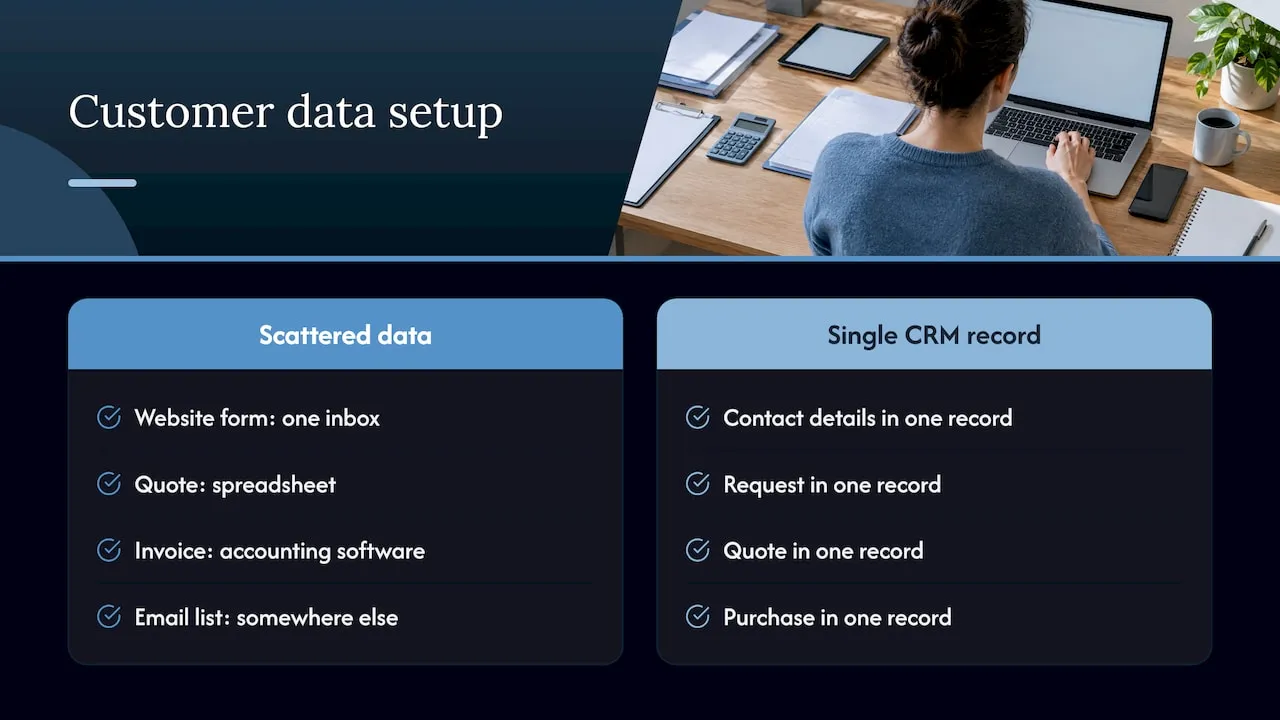
Lifecycle marketing breaks when information is scattered. The website form goes to one inbox, the quote lives in a spreadsheet, the invoice is in accounting software and the email list sits somewhere else. Then a person who already hired you keeps getting sales emails.
The fix is a single customer record that your website, your email and your team all use. A customer relationship management system (CRM) is the software that holds that record: contact details, what they asked for, what you quoted and what they bought. Each message is then based on what that record says.
This is the core of our Email and CRM work. We build on platforms such as Salesforce Marketing Cloud and Braze, with modular email templates, lead routing and journey automation. Our founder previously built lifecycle systems at Amazon, Verizon and American Express, and we bring that experience to service businesses. You can see the local pages for Delray Beach Email & CRM Development | Forefront Industries and Boca Raton.
Email rules you must follow
Commercial email in the United States is covered by the CAN-SPAM Act. The FTC’s guide says each message must include a valid physical postal address and a clear way to opt out, and that you must honor opt-out requests within 10 business days. Build the unsubscribe link and your address into every template from the start. If you operate in healthcare, talk to your attorney or compliance adviser before you put patient information into any email or text workflow.
What to measure
Pick a few numbers per stage. More than that and no one looks at them.
| Stage | Measure | Question it answers |
|---|---|---|
| Awareness | Website visitors from local search; calls from your Google Business Profile | Are the right people finding us? |
| Consideration | Form fills; booked consultations | Do visitors take the next step? |
| Conversion | Time to first reply; quote-to-signed rate | Do we win the leads we get? |
| Retention | Repeat bookings; reactivated past clients | Do clients come back? |
| Advocacy | New reviews per month; referrals | Do happy clients speak up? |
Time to first reply is the one most owners have never measured, and it is often the most revealing. Also track how people move between stages, not only the totals, so you can see where they drop off.
Test one thing at a time. Change a subject line, a button or a landing page, then compare results before changing the next.
Perspective
Most service business owners come to us with a website problem. After a short look, the problem is usually bigger than the site. The site gets visitors, but nobody has decided what should happen after someone fills out the form.
We build the website and the follow-up as one system. The site is custom-coded around conversion. The forms feed a single customer record. The email and text messages follow rules written around your actual workflow, not a template that fits every business a little.
That is the part we care about most. A lifecycle plan on paper helps nobody. A lifecycle that runs every day, whether you are busy, on vacation or on a job site, is what turns inquiries into clients and clients into repeat business.
If you start small, start with the first reply. It is the cheapest fix and the one with the fastest payoff.
Jeremy
Where Forefront Industries fits
We are a Delray Beach web design studio. We build custom websites, set up the Email and CRM systems behind them, and automate the follow-up tasks that eat your week. Our services cover web design and development, email and CRM development and AI automation and consulting.
Once the system is live, the site needs care. Our website maintenance plans run $99 per month for Managed Hosting, $250 per month for Webmaster and $750 per month for Performance Plus. For businesses with repetitive internal tasks, we also offer AI automation. If you are in Boca Raton and need a new site first, start with web design in Boca Raton.
Common mistakes
- Treating lifecycle marketing as email only. The website, Google Business Profile and phone handling are part of it.
- Sending the same message to everyone. A new inquiry and a three-year client need different messages.
- Building too many stages. Eight is plenty. Many businesses do well with five.
- Ignoring the people who already hired you. Past clients are your cheapest source of new work.
- No owner. If nobody is responsible for a stage, the messages go stale.
- Skipping the unsubscribe link. It is required and it protects your sender reputation.
FAQ
What is the difference between customer lifecycle marketing and a marketing funnel?
A funnel stops at the sale. Lifecycle marketing continues after it, with onboarding, repeat business, reviews and referrals. It also allows people to move back and forth between stages, which a funnel does not.
Do small service businesses need lifecycle marketing?
Yes, and small businesses often gain the most, because each lost lead costs a larger share of revenue. You do not need a large setup. A fast first reply, a quote follow-up and a review request already form a basic lifecycle.
How many stages should I use?
Use five to eight. Five is a good start for most service businesses: awareness, consideration, conversion, retention and advocacy. Add stages only when you see a real difference in how those clients behave.
How long does it take to set up?
The simplest pieces, such as an instant reply and a review request, can be live quickly. A full system with a connected customer record and journeys across email and text takes longer and depends on your tools and workflow. We scope it after looking at how your business runs today.
Which should I fix first, my website or my follow-up?
Look at where you lose people. If visitors do not contact you, fix the website. If they contact you and then disappear, fix the follow-up. A free audit shows which one it is.
Sources
- Lifecycle Marketing Strategy: Guide to Customer Growth, Monday.com
- The Customer Lifecycle Explained, Amplitude
- CAN-SPAM Act: A Compliance Guide for Business, Federal Trade Commission
- Why Your Storage Website Is Not Getting Leads
- Quote Follow-Up Templates and Cadence for Tradespeople
Not sure where your leads drop off? Get the free website audit at forefrontindustries.io/website-audit.